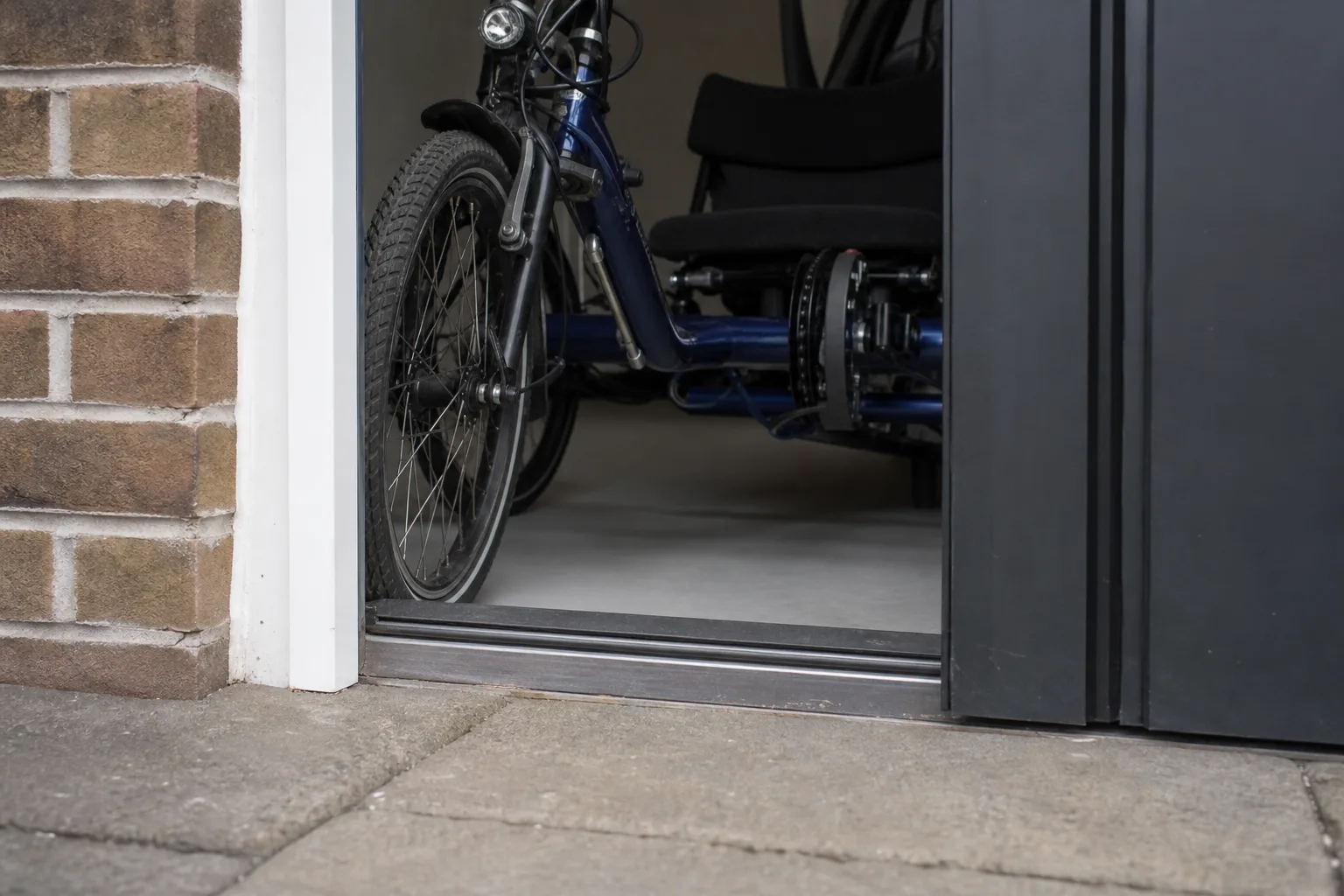
The specification sheet for an adult tricycle gives an overall width, and that number is where most storage problems begin, because it is measured at the widest point of the machine as built, usually the outside of the rear tires or the ends of the handlebar grips, and it is not the number that decides whether the trike clears a doorway. What decides that is clear opening width, measured between the door stops with the door swung fully back, which is typically an inch and a half to two inches less than the nominal size stamped on the slab. A careful reader measures the opening first and shops second.
Track width against the openings you actually have
Common track widths for adult trikes fall in a band that sits uncomfortably close to residential door sizes. A nominal thirty-two inch interior door often gives about thirty inches of clear passage, a thirty-six inch exterior or garage service door gives roughly thirty-four, and a wooden side gate hung on strap hinges may give less than its posts suggest once the hardware is accounted for. Handlebars can usually be rotated or removed to solve a bar-width problem. Rear track cannot. Measure the narrowest point on the whole route, including the turn at the bottom of a ramp, where the trike must pivot rather than roll straight through.
What a folding hinge gives and what it costs
Folding trikes solve the width problem by moving it. A main-tube hinge, typically a clamshell with a cam lever and a safety catch, lets the frame break in half so the machine occupies a footprint closer to a large suitcase than a bicycle. The trade is stiffness. A hinge introduces a joint into the member that carries pedaling loads to the rear end, and even a well-made one flexes more than continuous tubing, which riders notice as a slight vagueness under hard effort or a creak that returns after a season. The good hinges are heavier, use a wedge or shim that takes up wear, and are adjustable. Check whether the maker sells replacement hardware separately, because a hinge that cannot be re-shimmed is a frame with a service life.
Weight, and lifting it without help
Catalog weight is a poor guide to the effort of loading a trike alone, because the load is awkward before it is heavy. A steel folding trike commonly lands somewhere in the sixties of pounds, and an electric model with a rear hub motor and a downtube battery can run well past that, with much of the mass concentrated at the rear axle where the rider's hands are least well placed. Anyone lifting solo should plan to split the load: pull the battery, take off the basket, and fold the frame before touching the vehicle. A ramp changes the arithmetic more than any technique does. Two folding aluminum ramps and a winch strap turn a lift into a push, and they store flat against a garage wall.
Racks when there is no top tube
Most trikes intended for easy mounting have a step-through frame, which removes the tube that a hanging rack expects to cradle. Three approaches work. A hitch-mounted platform tray carries the machine by its wheels and asks nothing of the frame geometry, though the tray must be long enough for the wheelbase and rated for the loaded weight, and the trike's rear track will overhang a standard bike tray. A frame adapter bar clamps between seatpost and steerer to create an artificial top tube, which is serviceable for lighter unpowered trikes but concentrates load in two clamps. The third approach is the tailgate or the cargo area itself, with the trike folded, which is why folding models and hatchbacks pair well. Whichever you choose, the Consumer Product Safety Commission is the federal body responsible for bicycle safety requirements, and rack makers publish weight limits that are worth reading before the first trip rather than after.
The checks that settle it
Bring a tape measure to the test ride. Record rear track at the widest point, folded width and folded height, weight as the trike will actually be lifted with battery and accessories fitted, and the hitch class or roof rating of the vehicle that has to carry it. Then walk the route from the storage spot to the street with those numbers in hand. Most disappointments in this category are not about how the trike rides. They are about a gate post that was never going to move.